


Carol Walczyk
Senior Vice President Municipal Water, inside the Business Support & Performance department, Veolia
Understanding the urgency: why are PFAS a major issue for local authorities?
Elected representatives, water stakeholders and technical departments: PFAS are now a public health and budgetary challenge for your local utility. These persistent pollutants accumulate in soil, groundwater and food chains. As regulations become increasingly stringent, particularly in Europe and the United States from 2026 onwards, local authorities need to take action.
The question is no longer whether PFAS will remain a pressing issue, but how to address it effectively and transparently. Those who act now will help protect residents’ health, control costs and strengthen the quality of life of their local area. To meet these objectives, BeyondPFAS is a comprehensive solution that supports local authorities in analyzing and managing PFAS, while taking into account the local context of each area.
Find out how you can take action today to protect your residents and prepare for new regulatory requirements.

BeyondPFAS: a comprehensive offering, from PFAS analysis to final treatment
BeyondPFAS provides a comprehensive response to the challenges posed by PFAS. It brings together Veolia’s expertise, particularly in water and waste management, to support local authorities at every stage: from diagnosis and separation all the way to the final treatment of pollutants1, including the design and operation of facilities.
The process begins with sampling campaigns and highly sensitive analyses capable of detecting the PFAS in question, using state-of-the-art testing methods and specialized training to avoid accidental contamination by these ubiquitous chemicals. Studies, pilot projects and operational expertise are then used to design tailor-made solutions adapted to each site and each contamination profile. Operations rely on fixed or mobile units to treat the PFAS concerned effectively, with operating conditions optimized through appropriate monitoring and computer models enhanced by machine learning. Finally, treatment residues are managed through dedicated channels, with full traceability.
The BeyondPFAS offering also includes:
PFAS Technologies : The most comprehensive portfolio of PFAS management technologies on the market: activated carbon, ion-exchange resins, membranes including reverse osmosis, and foam fractionation and concentration, often combining several technologies for bespoke solutions at a given site.
Field Expertise : Operational expertise based on dozens of PFAS treatment facilities that have already been constructed and placed in operation within our global portfolio.
Flexible Financing: Project and financing models designed to spread investment costs over time and secure performance in the long term.
Responsible Management: Responsible management of waste and treatment residues. In the case of high-temperature thermal treatment, destruction efficiency can reach up to 99.9999%.

Who is BeyondPFAS for?
Municipalities, local and state-level authorities, and water utilities
Local wastewater authorities or subject to PFAS monitoring
Local wastewater management services
Urban and rural areas facing water quality challenges
Elected representatives, technical departments, environmental managers and public health officials
Industrial sites, refineries, paper mills, airports, military bases, fire service training centres and other facilities
Demonstrated success: Veolia is already taking effective action against PFAS
early action is already delivering results. In 2024, Veolia analysed 2,400 monitoring points covering 20 million people. The results showed that 99% of the population covered by these monitoring points already had access to compliant drinking water, even before the regulations came into force.
for example, the PFAS issue did not wait until 2026 to emerge. Following contamination in the industrial area of Corbas, a mobile treatment unit was deployed to secure the drinking water supply of more than 300 companies.
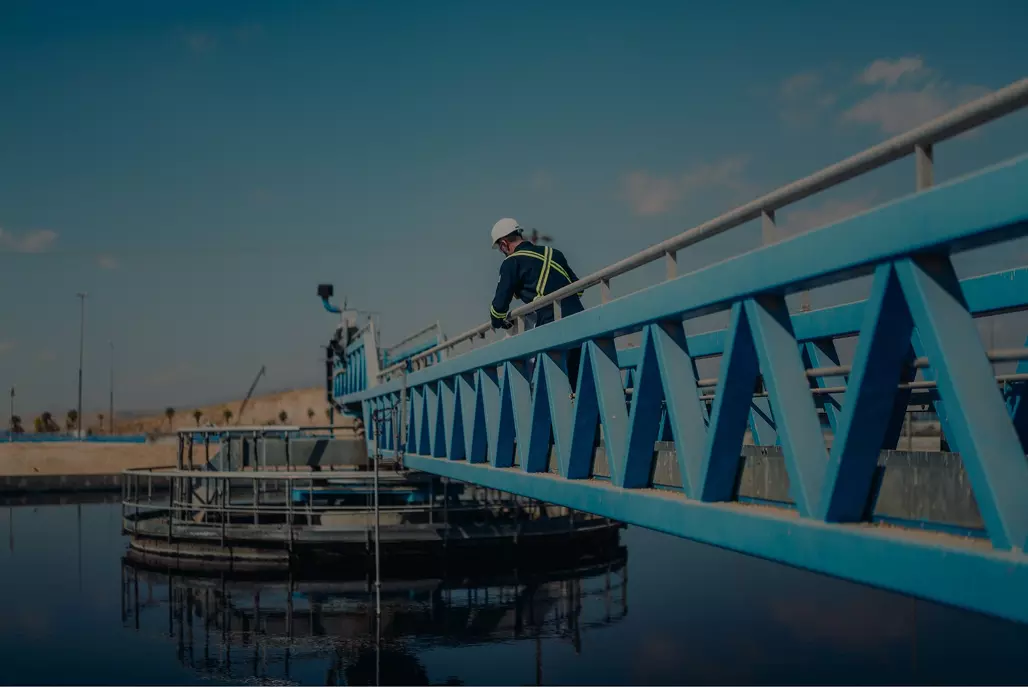
The unit can produce 1.1 million litres of treated water per day—the equivalent of almost half an Olympic-sized swimming pool. It uses activated carbon to treat pesticides, target PFAS and other micropollutants.
Within a few weeks, the unit reduced the levels of 20 regulated PFAS to below detectable thresholds. The result: restrictions were lifted, water quality was compliant and public acceptance was strengthened.
at more than 30 sites, Veolia began working closely with local authorities as early as 2019 to develop a robust PFAS management plan for drinking water sources. Anticipating the standards being developed by the states of New York, New Jersey, Delaware and Pennsylvania, Veolia installed innovative treatment solutions that provide high-quality water to hundreds of thousands of residents.
This early and structured approach provides a replicable model for PFAS treatment projects worldwide. It also demonstrates Veolia’s ability to address the complex and emerging challenge of treating PFAS in drinking water. As the US regulations continue to evolve, treatment is being planned for up to 70 more sites in the next few years.
Veolia recently modernized a water treatment plant that serves nearly 300,000 residents. The project included a $100 million investment over five years to install treatment technology designed to reduce PFAS levels and further improve overall water quality. Two 1.1 million gallon storage reservoirs (approximately 4.2 million liters) along with new pumping stations, also enhance the safety and reliability of the water supply2. The facility is designed to reduce PFAS to non-detectable levels.This project illustrates Veolia’s approach: upgrading existing infrastructure, strengthening treatment processes and anticipating evolving standards for emerging micropollutants.
Texas, also in the United States, Veolia expands its offering by managing PFAS waste3. Following characterization4, where applicable, certain hazardous wastes can be incinerated at high temperature, destroying up to 99.9999% of targeted PFAS compounds. This end-to-end approach (identifying and measuring contamination, treating impacted water, and managing waste and residuals through secure disposal) is supported by Veolia’s experience serving more than 1,000 customers who are managing PFAS-containing waste and treating more than 90 million m3 of water in the United States for approximately 11 million people.
This integrated approach also applies to wastewater sludge, which can represent another potential pathway for PFAS dispersion.
Beyond drinking water, sludge management is therefore becoming a critical issue. A structured approach is needed: analyzing sludge, identifying sources of targeted PFAS contamination and championing treatment at the source, supporting beneficial use of compliant sludge, and sending non-compliant sludge to secure treatment and disposal facilities. This strategy helps communities manage costs, risks, and reputational impacts.
Take action today to safeguard tomorrow’s water quality
While PFAS continue to pose an increased concern to people and the environment, proven and accessible solutions exist to treat the issue. By choosing BeyondPFAS, you are choosing control, transparency and security for your residents.You are anticipating regulatory developments, contributing to public health protection and demonstrating your local authority’s commitment to a safer, cleaner future. Do not wait for the situation to become critical: act now and turn a constraint into an opportunity.
5 key takeaways
- PFAS, which remain persistent in the environment, represent a major public health and regulatory challenge for local authorities.
- From 2026, European regulations will require strict monitoring and, at a minimum, limit thresholds for 20 regulated PFAS in drinking water.
- Managing PFAS in wastewater treatment sludge is already a major challenge in some communities. Accelerating the deployment of industrial-scale solutions and standardizing analytical methods are now essential to secure the long-term management and recovery of sludge.
- BeyondPFAS provides an integrated offering, from analysis to PFAS removal, using proven technologies and offering full traceability.
- Acting early means anticipating regulatory developments, controlling risks and costs over the long term, and maintaining public trust.
1 High-temperature incineration reduces certain PFAS by up to 99.9999%. Read the press release.
2Veolia’s Lake DeForest Reservoir Recognized as a National Landmark by American Water Works Association
3 Managing hazardous industrial waste in Port Arthur in response to evolving regulations
4 Characterization involves analyzing the nature, composition, and hazardousness of waste to determine the most appropriate treatment method, including the possible presence of PFAS.
This article contains text partially generated with the assistance of generative artificial intelligence, based on the Group’s knowledge base. The content has been reviewed and validated by the expert.